
Learning Hub
Our commitment to customer success drive us to provide tools and resources necessary for your poultry business to achieve profitability.
Health Management
RECOMMENED LAYER/KENBRO VACCINATION PROGRAM
| DAY | VACCINE | METHOD |
| 1( Done In The Hatchery) | Mareks + IBD-Vaxxitek NCD+IB Live(Vitabron) |
Intramuscular injection Spray( done in the hatchery) |
| 15-18 | NCD+IB Live | Eye drop/Drinking water |
| WK 6-8 | NCD Killed or NCD+IB Live. Fowl typhoid |
Intramuscular injection. Drinking water Intramuscular Injection |
| WK 8-10 | Fowl pox Fowl cholera |
Wing stab Subcutaneous injection |
| WK 12-14 | Fowl typhoid | Intramuscular injection |
| WK 16-18 | NCD+IB Live | Drinking water/spray |
| WK 16-18 | Fowl cholera | Subcutaneous injection |
Health Management
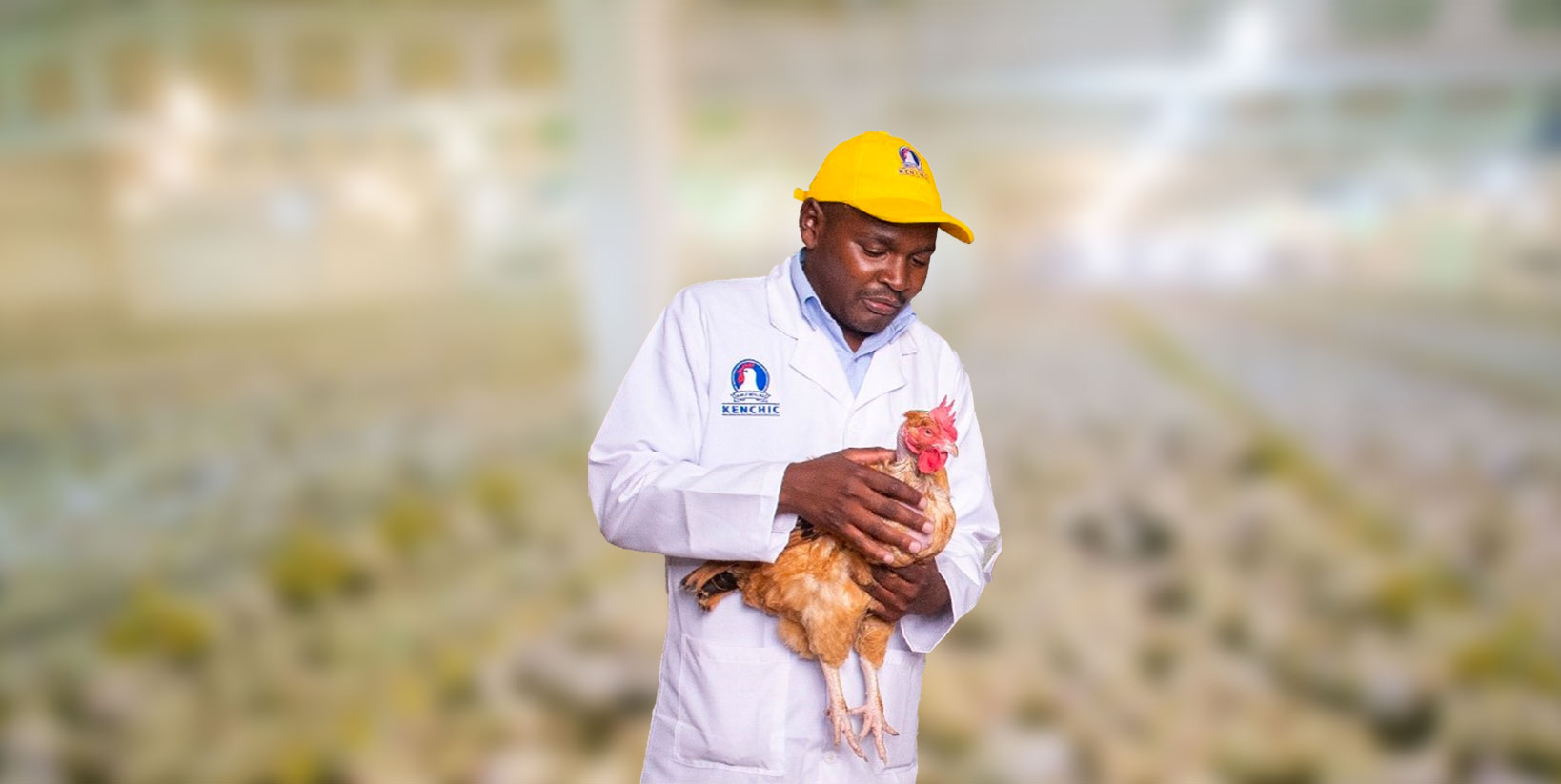
Kenchic Adops A Two-prong Approach In Dealing with Gumboro And Newcastle Diseases Of Poultry At Hatchery
Gumboro disease
The disease was first isolated in a village called Gumboro in USA in early 1960s, but by the 1980s the virus had spread to the rest of the world.
This viral infection attacks the immune system of young birds by destroying the B lymphocytes in their immature stages in the Bursa. The virus is hard to kill and can survive in moist old litter for up to four months. The virus can mutate and change its form, thus defeating the immune system of the bird. It is common in huge poultry complexes, where birds are raised in multi-age systems. Chickens are more susceptible at 3-6 weeks of age when Bursa is at its maximum rate of development and filled with B cells.
The affected birds discharge whitish diarrhoea, huddle together. Massive mortality is observed in non-vaccinated flocks. This mortality pattern has a bell shape curve and disappears in seven days.
Newcastle disease
This is a disease of poultry caused by a Ribulavirus, causing both respiratory and enteric infection in chickens of all ages. The virus enters via any mucosal surface: it multiplies in the epithelium, spreading via the bloodstream to other organs, where fast multiplication occurs, ultimately leading to increased concentration in the blood. It multiplies in all organs, especially in the respiratory and intestinal tract. The most virulent strains also affect the nervous system.
Virus shedding occurs by faeces and through aerosol and dust loadings in the air. The most obvious clinical signs are sudden and massive mortality, with neurological signs like star gazing, limb paralysis, twisted necks and the inability to feed, resulting in greenish diarrhoea. For birds in production, there is a significant drop in egg production.
Poultry Centres Near Me
Stop by any Kenchic Poultry Centre for feeds, day old chicks, specialized technical and lab assistance or a quick consult with one of our vets.